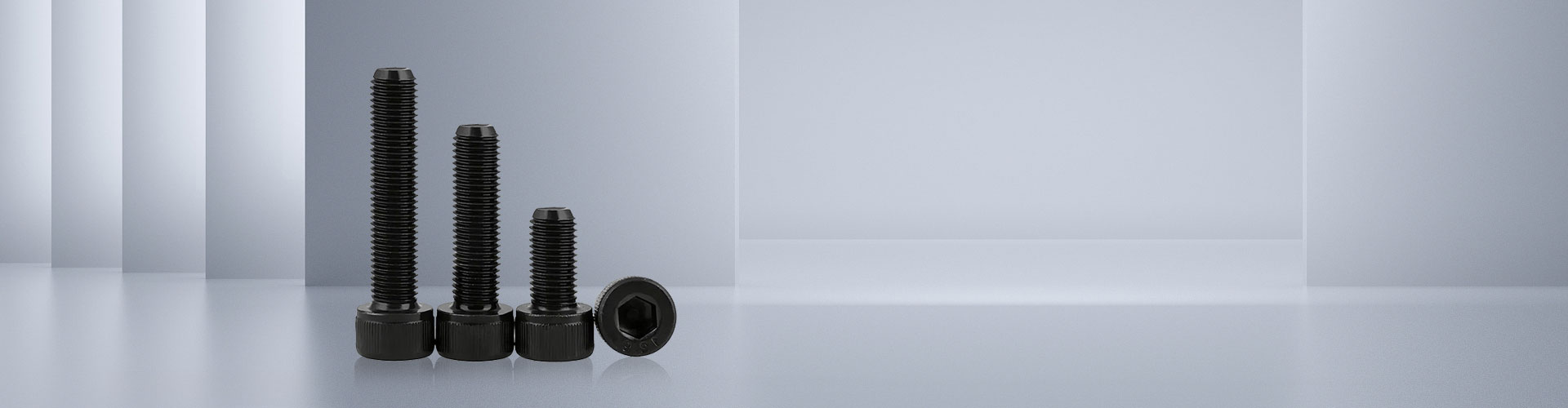
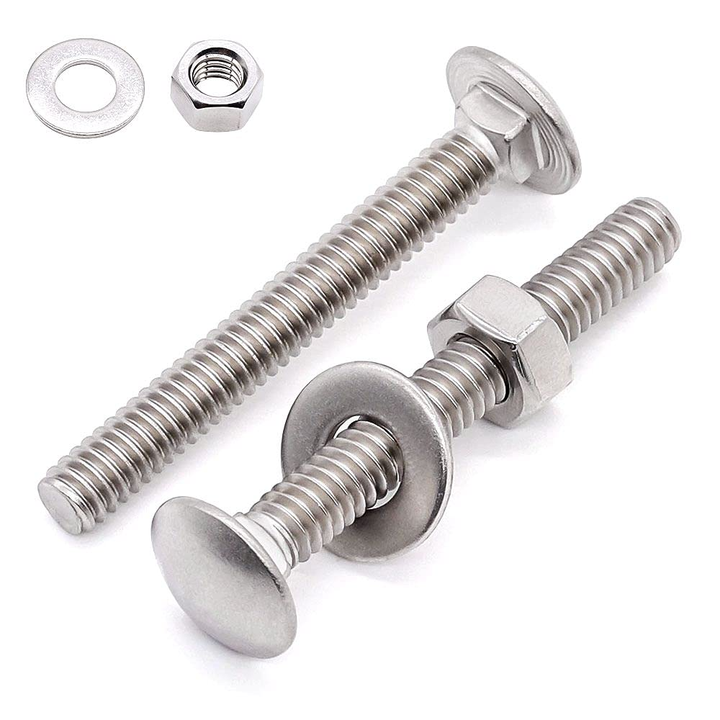
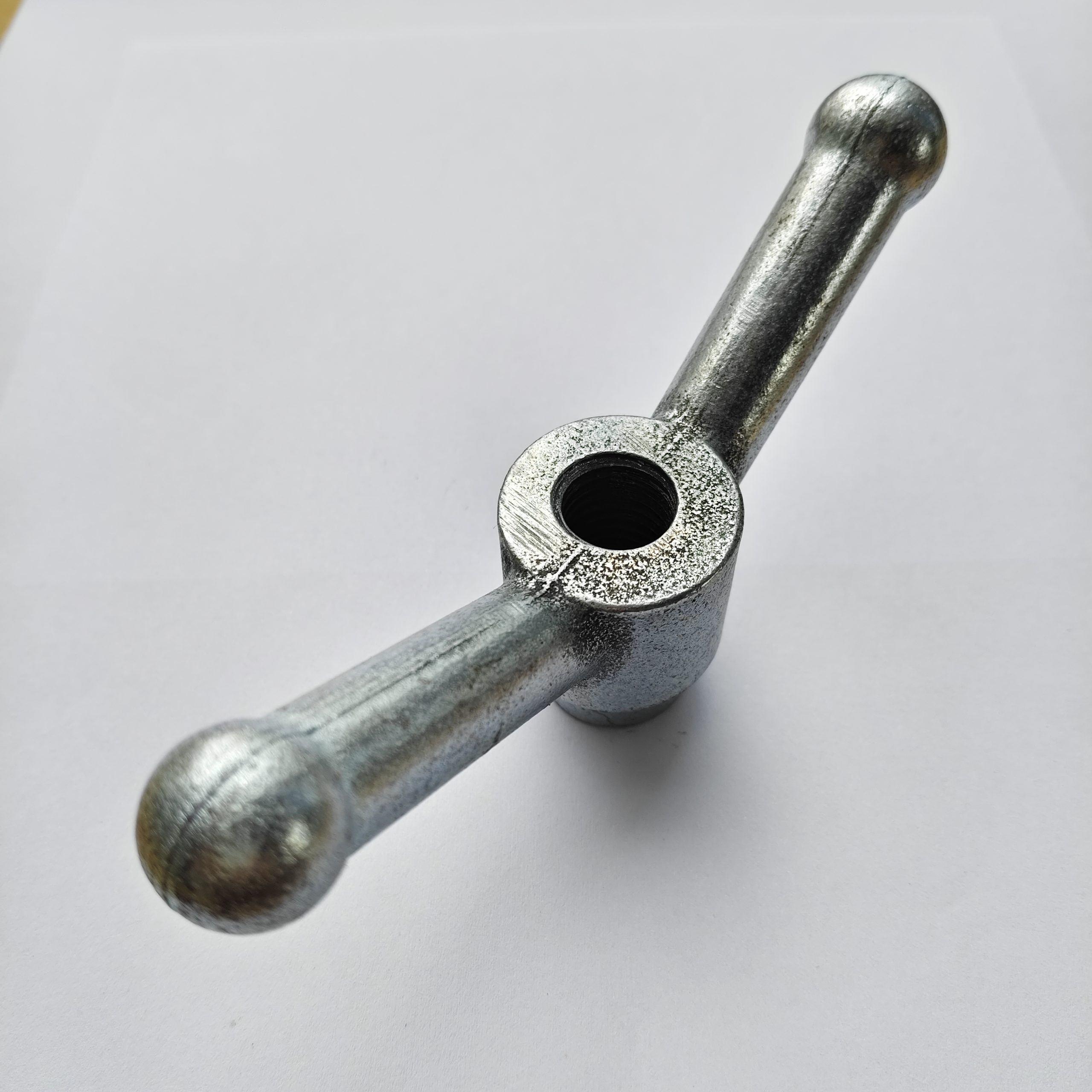
Shaped bolts solve real-world fastening problems that standard hardware can’t handle—like securing curved structural frames, mounting equipment on angled surfaces, or maintaining alignment under dynamic torsional loads. We’ve seen clients replace three-part assemblies with a single custom-shaped bolt—and cut installation time by 60%. That’s not theoretical. It’s what happens when geometry meets engineering intent.
Why Standard Bolts Fail Where Shaped Bolts Succeed
Standard hex bolts assume flat bearing surfaces, perpendicular load paths, and uniform clamping force distribution. But real structures don’t comply. A wind turbine nacelle mount has compound curvature. A railcar brake bracket experiences lateral shear plus vertical preload. A medical imaging gantry demands micron-level repeatability across thermal cycles. In each case, the bolt isn’t just a connector—it’s a load-path director, a stress reliever, a positioning anchor.
That’s where ata mamanu deliver measurable value: they transfer forces along engineered contours instead of forcing components to conform. A bent bolt with a 45° offset leg eliminates the need for a separate angle bracket. A flanged, contoured head replaces a washer + spacer + shoulder bolt stack. A double-radius shank accommodates differential expansion between aluminum housing and steel shaft without loosening.
We’ve tested over 17 variations in bending fatigue at Hebei Dewell’s R&D lab—measuring deflection at 50,000, 100,000, and 500,000 cycles. Results show shaped designs reduce localized stress concentration by up to 38% versus straight-bolt workarounds. Not all bends are equal. Radius-to-diameter ratio matters. Material grain flow during cold forging must follow the contour—not cross it. That’s why off-the-shelf bent bolts often fail prematurely.
Four Critical Design Decisions You Can’t Outsource
A maeʻa ata mamanu, these four parameters determine success—or field failure:
- Bend radius relative to nominal diameter: Below 3×D, cold-forming cracks appear in Grade 10.9 alloy steel; above 8×D, elastic recovery distorts final geometry.
- Surface finish location: Zinc coating must avoid crevices where moisture traps; PTFE lubrication stays effective only if applied *after* bending—not before.
- Thread engagement length: Must account for angular misalignment. A 12-mm thread may engage only 8 mm effectively if the nut seats at 3° off-axis.
- Material grade compatibility: ASTM A193 B7 handles high-temp bending better than DIN 933 8.8—but loses ductility below –20°C. Stainless 316 works in marine environments but sacrifices tensile strength versus alloy steel.
Some engineers try bending stock bolts onsite. We’ve documented 22 cases where field-bent bolts failed within 6 months—mostly due to microcracks invisible to the naked eye. Precision shaping requires controlled deformation, post-form heat treatment, and full traceability. That’s non-negotiable for structural integrity.
How Hebei Dewell Delivers Repeatable Performance
At Hebei Dewell Metal Products Co., LTD, shaped bolts aren’t an afterthought—they’re built into our vertical workflow. Our CNC-integrated cold-forging lines shape blanks *before* threading, preserving grain continuity. Surface treatment happens in-house, so zinc layers bond uniformly—even inside tight radii. Every batch undergoes tensile testing per ASTM F606, with bend-angle verification using laser displacement sensors calibrated to ±0.05°.
We maintain two dedicated R&D departments: one focused on metallurgical behavior during complex forming, the other on application-specific load modeling. When a Southeast Asian crane manufacturer needed bolts for articulating jib hinges, we ran finite-element simulations on 14 geometries—then validated the top three with physical fatigue rigs. Final design reduced hinge wear by 41% over 18 months of operation.
Our 10-acre facility handles everything from raw material inspection to container loading. No third-party plating. No outsourced threading. No logistics handoffs. That’s how we guarantee 15–20-day lead times for custom ata mamanu, with full documentation: Certificates of Conformance, Origin, and batch-specific test reports.
Choosing the Right Partner Isn’t About Price—It’s About Predictability
Low-cost suppliers quote shaped bolts as “bent standard parts.” They skip pre-form annealing. They skip post-bend stress relief. They skip dimensional verification at every station. The result? Bolts that pass visual inspection but fail torque retention checks—or worse, hold until the first thermal cycle.
Hebei Dewell’s approach is different: we treat each shaped bolt as a custom-engineered component. We map your assembly sequence. We simulate load vectors. We validate surface hardness *after* bending—not before. We ship with lot numbers tied to raw material heats, machine IDs, and operator logs.
If your project needs corrosion resistance, we use hot-dip galvanized Grade 8.8 with ASTM A153 compliance. For extreme environments, we form stainless 316 bolts with electropolished finishes. For high-strength applications, we cold-forge 12.9 alloy steel—then verify yield strength per DIN EN ISO 898-1.
Over 400 standardized and customizable SKUs exist—not as catalog entries, but as proven solutions deployed across construction, rail, energy, and industrial machinery. Each one starts with a question: What does the structure actually need the bolt to do? Not what’s easiest to manufacture. Not what fits in existing tooling. What keeps people safe, systems running, and downtime zero.
Shaped bolts aren’t niche hardware. They’re precision load directors—engineered where geometry meets function. When your design demands more than a straight line, start with the shape.