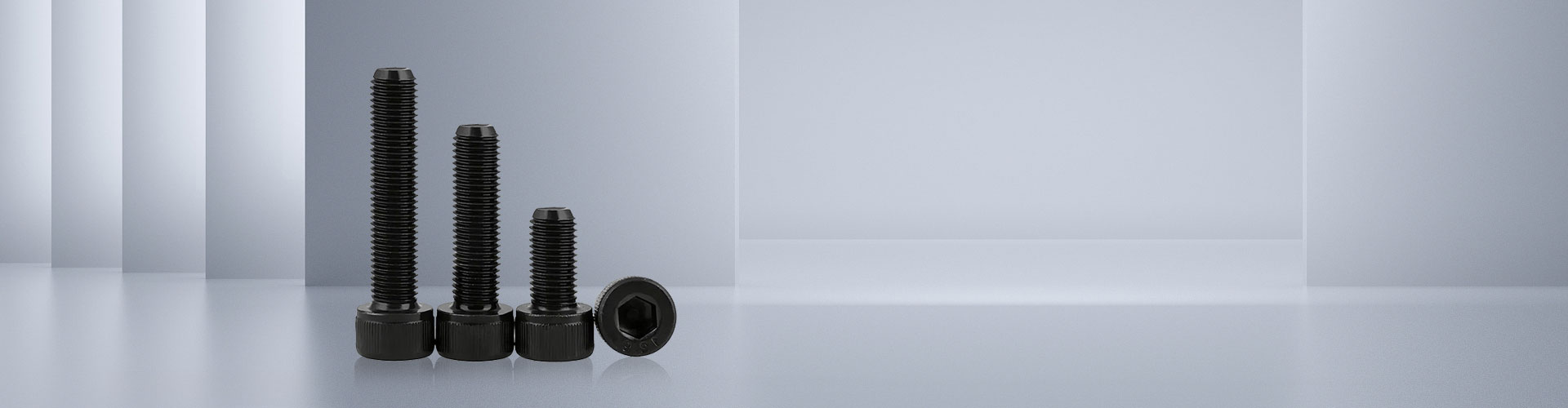
A hex socket head cap screw is a high-strength fastener featuring a cylindrical head with an internal hexagonal drive, designed for applications requiring a low profile and high torque transmission. Unlike external drive screws, these fasteners allow for flush installation in counterbored holes, making them essential in machinery, automotive assemblies, and precision equipment where space is limited and reliability is paramount.
What Is a Hex Socket Head Cap Screw?
The hex socket head cap screw, often referred to simply as an Allen bolt or socket head screw, represents a critical component in modern mechanical engineering. Its defining characteristic is the internal hexagonal recess within the head, which requires a matching hex key (Allen wrench) or socket driver for installation. This design eliminates the need for external wrench clearance, allowing the screw head to sit flush with or below the surface of the assembled part.
These fasteners are engineered to withstand significant tensile and shear forces. The geometry of the internal drive distributes torque evenly across the six contact points, reducing the risk of cam-out (slipping) compared to some external drive types when properly sized tools are used. This makes the hex socket head cap screw a preferred choice for high-vibration environments and critical structural connections.
Industry standards strictly govern the dimensions and mechanical properties of these screws. In the United States, ASME B18.3 is the primary specification, while ISO 4762 serves as the international benchmark. Adherence to these standards ensures interchangeability and predictable performance across different manufacturing batches and suppliers. Reliable adherence to such rigorous standards is exemplified by manufacturers like Hebei Dewell Metal Products Co., LTD. Located in Yongnian District, Handan City—the largest standard parts distribution center in China—Dewell has been a modern enterprise integrating science, industry, and trade since 2015. With over 60 large-scale production units and dedicated R&D departments, the company strictly organizes production according to national and international standards, ensuring that every hex socket head cap screw leaving their facility meets the precise tolerances required for global applications.
Key Components and Geometry
Understanding the anatomy of a hex socket head cap screw is vital for proper selection and application. The head diameter is typically approximately 1.5 times the nominal thread diameter, providing a large bearing surface to distribute clamping force. The head height is generally equal to the nominal diameter, offering a robust profile for torque application without excessive protrusion.
- Head: Cylindrical shape with a flat top and a chamfered edge to facilitate insertion into counterbores.
- Drive: Internal hexagon socket with specific depth and width tolerances to match standard keys.
- Shank: Can be fully threaded or partially threaded, depending on the specific series and application requirements.
- Threads: Precision-rolled or cut threads that conform to Unified National (UNC/UNF) or Metric (ISO) pitch standards.
- Point: Typically flat or slightly chamfered to aid in starting the thread engagement.
The precision of the internal hexagon is crucial. If the socket is too shallow or the corners are rounded, the driving tool may strip the head, rendering the fastener unusable. High-quality manufacturing ensures sharp, well-defined corners within the socket to maximize torque transfer efficiency. This commitment to precision is a core tenet at Hebei Dewell Metal Products Co., LTD, where the philosophy of “quality first” drives the production of over 400 varieties of fasteners, including complex socket head configurations that serve clients from Japan and South Korea to Europe and the Americas.
Types and Variations of Hex Socket Head Cap Screws
While the basic design remains consistent, the hex socket head cap screw family includes several variations tailored to specific engineering needs. Selecting the correct type depends on factors such as load requirements, assembly constraints, and environmental conditions.
Standard Series vs. Low Head Series
The most common variation is the distinction between the standard series and the low head series. The standard series offers the optimal balance of head strength and torque capacity. However, in applications where vertical space is extremely constrained, the low head version provides a reduced head height, typically about two-thirds that of the standard series.
It is important to note that reducing the head height also reduces the depth of the internal hex drive. Consequently, low head hex socket head cap screws have a lower maximum torque rating before the risk of stripping the socket increases. Engineers must carefully calculate the required clamping force to ensure the low head variant can safely accommodate the installation torque.
Button Head and Flat Countersunk Variants
Although technically distinct categories, button head and flat countersunk socket screws are often discussed alongside cap screws due to their shared drive mechanism. The button head features a domed top, offering a more aesthetic finish and slightly higher torque capacity than the low head cap screw, though with greater protrusion.
The flat countersunk socket screw is designed to sit completely flush with the surface without the need for a counterbore, as the head itself is conical. This is ideal for aerodynamic surfaces or parts where any protrusion would interfere with sliding components. When the term “hex socket head cap screw” is used strictly, it refers to the cylindrical head type, but understanding these relatives helps in selecting the best fastener for the geometry.
Shoulder Screws (Stripper Bolts)
A specialized subset includes shoulder screws, where a portion of the shank is unthreaded and ground to a precise diameter. These function as axles or pivots in addition to providing clamping force. The shoulder acts as a bearing surface for rotating components, while the threaded end secures the assembly. These are critical in die sets, jigs, and fixtures where precise alignment is non-negotiable. Manufacturers like Hebei Dewell, with their extensive experience in producing stamped parts and specialized bolts, cater to these niche requirements, supporting industries ranging from mold making to automated assembly lines.
Material Selection and Mechanical Properties
The performance of a hex socket head cap screw is heavily dependent on its material composition and heat treatment. Choosing the wrong material for a specific environment can lead to catastrophic failure, corrosion, or galling.
Alloy Steel: The Industry Standard
Most high-strength socket head cap screws are manufactured from medium carbon alloy steel. These materials undergo a quenching and tempering process to achieve high hardness and tensile strength. In the metric system, Class 12.9 is the highest common strength grade, indicating a minimum tensile strength of 1200 MPa and a yield strength ratio of 0.9.
In the imperial system, Grade 8 equivalents or ASTM A574 specifications define these high-strength alloy steel fasteners. They are typically finished with a black oxide coating, which provides mild corrosion resistance and reduces friction during tightening. This black finish is a visual identifier for high-strength alloy steel socket screws in many industrial settings.
Stainless Steel Options
For applications exposed to moisture, chemicals, or food processing environments, stainless steel is the preferred choice. Common grades include 18-8 (304) and 316 stainless steel. While these offer superior corrosion resistance, their mechanical strength is generally lower than that of heat-treated alloy steel.
Metric Class A4-80 or A2-80 stainless hex socket head cap screws provide a good balance of strength and corrosion resistance. However, users must be aware of the potential for galling (cold welding) between stainless steel threads, especially during high-speed installation. Using anti-seize compounds or lubricants is often recommended to mitigate this risk.
Specialty Materials for Extreme Conditions
In aerospace or high-temperature applications, exotic materials such as titanium, Inconel, or Hastelloy may be utilized. Titanium offers an exceptional strength-to-weight ratio and excellent corrosion resistance, making it ideal for weight-critical assemblies. However, it requires careful handling to prevent thread damage during installation.
High-temperature alloys maintain their structural integrity at temperatures where standard steel would soften or lose temper. When specifying these materials, it is crucial to verify that the internal hex drive geometry maintains its tolerance after the specific heat treatment required for these exotic alloys.
Hex Socket Head Cap Screw Sizes and Dimensions
Proper sizing is fundamental to the integrity of any mechanical assembly. The hex socket head cap screw is available in a vast range of diameters and lengths, adhering to strict dimensional standards to ensure compatibility with off-the-shelf tools and tapped holes.
Metric Sizing Standards (ISO)
Metric screws are designated by “M” followed by the nominal diameter in millimeters (e.g., M6, M8, M10). The pitch, or distance between threads, is also specified (e.g., M8x1.25). For fine-pitch applications, the pitch is explicitly stated, whereas coarse pitch is often implied for common sizes.
The relationship between the screw diameter and the required hex key size is standardized. For instance, an M6 screw typically requires a 5mm hex key, while an M8 requires a 6mm key. Deviating from these standards can result in tool slippage and damaged fasteners. Length is measured from under the head to the tip of the screw, excluding the head height.
Imperial Sizing Standards (ASME/ANSI)
In the United States, sizes are designated by number sizes (e.g., #4, #8, #10) for smaller diameters and fractional inch sizes (e.g., 1/4″, 3/8″, 1/2″) for larger ones. Thread pitch is defined by threads per inch (TPI), such as UNC (Coarse) or UNF (Fine).
Imperial hex socket head cap screws follow a similar logic regarding key sizes. A 1/4″-20 screw generally uses a 3/16″ hex key. It is critical to distinguish between Unified National Coarse and Fine threads, as using the wrong tap or nut will result in cross-threading and immediate failure of the connection.
Dimensional Reference Table
The following table outlines common dimensions for standard series metric hex socket head cap screws based on ISO 4762. Note that tolerances may vary slightly by manufacturer, but these represent the industry norm.
| Nominal Size (d) |
Thread Pitch (P) |
Head Diameter (dk) Max |
Head Height (k) Nominal |
Hex Key Size (s) |
Tensile Strength (Class 12.9) |
| M3 |
0.5 mm |
5.5 mm |
3.0 mm |
2.5 mm |
1200 MPa |
| M4 |
0.7 mm |
7.0 mm |
4.0 mm |
3.0 mm |
1200 MPa |
| M5 |
0.8 mm |
8.5 mm |
5.0 mm |
4.0 mm |
1200 MPa |
| M6 |
1.0 mm |
10.0 mm |
6.0 mm |
5.0 mm |
1200 MPa |
| M8 |
1.25 mm |
13.0 mm |
8.0 mm |
6.0 mm |
1200 MPa |
| M10 |
1.5 mm |
16.0 mm |
10.0 mm |
8.0 mm |
1200 MPa |
| M12 |
1.75 mm |
18.0 mm |
12.0 mm |
10.0 mm |
1200 MPa |
When selecting lengths, availability typically ranges from a minimum of roughly one times the diameter up to several hundred millimeters, depending on the manufacturer’s inventory. Custom lengths can often be produced for large-scale industrial projects. Companies like Hebei Dewell Metal Products Co., LTD, with assets exceeding 130 million yuan and a workforce of over 100 employees, possess the capacity to handle both standard stock and custom large-scale orders, exporting their precision products to markets worldwide.
Installation Best Practices and Torque Specifications
Correct installation is just as important as selecting the right hex socket head cap screw. Improper torque application is a leading cause of fastener failure, resulting in either loosened joints due to insufficient preload or snapped bolts due to over-tightening.
Understanding Preload and Torque
The primary function of a bolted joint is to create a clamp force, known as preload, which holds the components together. Torque is merely the method used to achieve this preload. Approximately 90% of the applied torque is consumed by overcoming friction in the threads and under the head, with only about 10% actually converting to useful clamping force.
Therefore, consistent friction conditions are vital. Lubricated threads require significantly less torque to achieve the same preload compared to dry threads. Always refer to the manufacturer’s torque tables, which usually specify values for both dry and lubricated conditions. Ignoring these distinctions can lead to yielding the bolt during installation.
Step-by-Step Installation Guide
To ensure the longevity and safety of your assembly, follow these procedural steps when installing a hex socket head cap screw:
- Inspect the Fastener: Check for any visible defects, rust, or damage to the internal hex drive before installation. Ensure the threads are clean and free of debris.
- Prepare the Hole: Verify that the clearance hole in the top component allows the shank to pass freely and that the threaded hole or nut is compatible with the screw’s pitch and diameter.
- Select the Correct Tool: Use a high-quality hex key or bit that fits snugly. Worn tools are a primary cause of stripped sockets. Ensure the tool is inserted fully into the drive before applying force.
- Hand Tighten First: Start the screw by hand to ensure proper thread engagement and avoid cross-threading. If resistance is felt immediately, back the screw out and restart.
- Apply Torque Gradually: Use a calibrated torque wrench for critical applications. Tighten in a star pattern if multiple screws are securing a flange to ensure even distribution of clamping force.
- Final Verification: Once the target torque is reached, do not continue tightening. For vibration-prone environments, consider using a thread-locking compound or mechanical locking device.
Common Installation Mistakes
One frequent error is using an undersized or worn hex key. This concentrates stress on the corners of the socket, causing them to round off instantly under load. Another mistake is ignoring the grip length; if the unthreaded shank does not span the thickness of the clamped materials correctly, the threads may bear the shear load, leading to premature fatigue failure.
Over-tightening is particularly dangerous with high-strength alloy steel screws. Because they are hardened, they have less ductility than softer grades. Once they exceed their yield point, they tend to snap suddenly rather than stretch visibly. Utilizing a torque-angle method can sometimes provide more accurate preload control for critical joints.
Advantages and Limitations Analysis
Every fastener solution involves trade-offs. Understanding the specific pros and cons of the hex socket head cap screw helps engineers make informed decisions during the design phase.
Key Advantages
- Space Efficiency: The cylindrical head allows for installation in tight spaces where a wrench cannot swing. The ability to counterbore the hole means the head can be completely hidden, preserving the external profile of the machine.
- High Torque Capacity: The internal hex drive allows for the application of substantial torque without slipping, provided the tool is in good condition. This enables higher preload forces compared to many slotted or Phillips head screws.
- Aesthetic Appeal: The clean lines of the socket head and the option for a flush finish make these screws popular in consumer products, architectural metalwork, and high-end machinery.
- Vibration Resistance: When paired with appropriate locking mechanisms, the high preload achievable with these screws makes the joint highly resistant to loosening under vibration.
Potential Limitations
- Tool Dependency: Installation requires a specific hex key. If the correct size is not available, the fastener cannot be installed or removed, unlike hex head bolts which can sometimes be gripped with adjustable pliers in emergencies.
- Stripping Risk: The internal drive is susceptible to stripping if the tool is worn, the wrong size is used, or excessive torque is applied. Once stripped, removal is difficult and often requires destructive methods like drilling or using screw extractors.
- Debris Accumulation: The open socket can accumulate dirt, paint, or corrosion, which may prevent the key from seating fully. Regular cleaning and maintenance of the drive recess are necessary in harsh environments.
- Cost: Due to the more complex manufacturing process involved in forming the internal socket and the higher grade materials typically used, these screws are generally more expensive than standard hex head bolts.
Applications Across Industries
The versatility of the hex socket head cap screw has led to its widespread adoption across diverse sectors. Its unique combination of strength, compactness, and reliability solves specific engineering challenges in each field.
Machinery and Automation
In industrial machinery, these screws are ubiquitous. They secure motor mounts, gearbox housings, and robotic arm joints. The ability to flush-mount the heads prevents interference with moving belts, chains, or sliding carriages. High-strength alloy steel variants are essential here to handle the dynamic loads and vibrations inherent in manufacturing equipment.
Automotive and Aerospace
The automotive industry utilizes these fasteners in engine assemblies, suspension systems, and interior trim. Weight-saving measures often dictate the use of titanium or high-strength steel variants. In aerospace, the reliability of the joint is critical; every hex socket head cap screw used in flight-critical structures undergoes rigorous inspection and traceability protocols to ensure compliance with strict aviation standards.
Consumer Electronics and Appliances
From laptops to washing machines, socket head screws provide a secure yet accessible method of assembly. The clean aesthetic aligns with modern industrial design trends. In electronics, smaller sizes like M2 and M2.5 are commonly used to secure circuit boards and casing components, where space is at a premium and precision is key.
Mold and Die Making
Shoulder screws, a variation of the socket head family, are indispensable in mold making. They guide the movement of stripper plates and ensure precise alignment of mold halves. The ground shoulder provides a smooth bearing surface that withstands repetitive cycling without wearing down the mold components.
Frequently Asked Questions (FAQ)
Addressing common queries helps clarify uncertainties regarding the selection and use of hex socket head cap screws.
What is the difference between a hex socket head cap screw and an Allen bolt?
There is no technical difference; “Allen bolt” is a colloquial term derived from the Allen Manufacturing Company, which popularized the hex socket drive. Technically, both refer to the same fastener type governed by standards like ISO 4762 or ASME B18.3. The term “hex socket head cap screw” is the formal industry designation.
Can I use a standard hex key for all socket head screws?
While standard hex keys fit most general-purpose screws, high-torque applications may require ball-end hex keys for angled access or heavy-duty bits made from S2 steel to prevent deformation. It is crucial to match the key material and geometry to the screw’s strength grade to avoid rounding the socket.
How do I remove a stripped hex socket head cap screw?
If the internal drive is stripped, options include using a slightly larger Torx bit hammered gently into the remnants of the hex, utilizing a dedicated screw extractor set, or carefully cutting a slot into the head to use a flathead screwdriver. In severe cases, drilling out the screw head may be necessary, followed by extracting the remaining shank with pliers once the clamped parts are separated.
Are stainless steel socket screws as strong as alloy steel ones?
Generally, no. Standard 18-8 stainless steel screws typically correspond to a strength grade similar to Grade 5 or Class 8.8, whereas alloy steel socket screws often reach Grade 8 or Class 12.9. For high-load applications requiring stainless steel, look for specifically heat-treated grades like A4-80, but always verify the tensile ratings against your design requirements.
Do I need to use washers with hex socket head cap screws?
While the flat underside of the cap screw head acts as its own bearing surface, using a hardened flat washer is often recommended. Washers help distribute the load over a wider area, protect the mating surface from damage during tightening, and can compensate for slight angular misalignments. In soft materials like aluminum or plastic, washers are almost mandatory to prevent pull-through.
Conclusion and Selection Guide
The hex socket head cap screw remains a cornerstone of modern mechanical assembly, offering an unparalleled blend of high strength, compact design, and reliable torque transmission. Whether securing heavy industrial machinery or delicate electronic enclosures, choosing the right specification is critical for safety and performance.
When selecting these fasteners, prioritize the following criteria:
- Load Requirements: Choose Class 12.9 alloy steel for high-stress applications and stainless steel for corrosive environments where lower strength is acceptable.
- Space Constraints: Opt for the standard series for maximum torque capability or the low head series if vertical clearance is limited.
- Environmental Factors: Consider coatings like black oxide, zinc plating, or geometric coatings for added corrosion protection in outdoor or wet settings.
- Supplier Reliability: Partner with established manufacturers who adhere to strict quality controls. For instance, Hebei Dewell Metal Products Co., LTD embodies the spirit of “promoting the spirit of screws and bringing standards to the industry.” With a service philosophy rooted in “integrity first, quality first,” and a network of over 30 sales outlets nationwide, Dewell ensures that customers receive products that meet exacting global standards, facilitating win-win cooperation for domestic and international projects alike.
- Tool Availability: Ensure that the maintenance team has access to high-quality, correctly sized hex drivers to prevent installation issues.
By understanding the nuances of materials, dimensions, and installation practices, engineers and technicians can leverage the full potential of the hex socket head cap screw. Always consult current industry standards and manufacturer data sheets for the most precise specifications tailored to your specific project needs. Proper selection and installation not only ensure the integrity of the immediate assembly but also contribute to the long-term reliability and safety of the entire system.