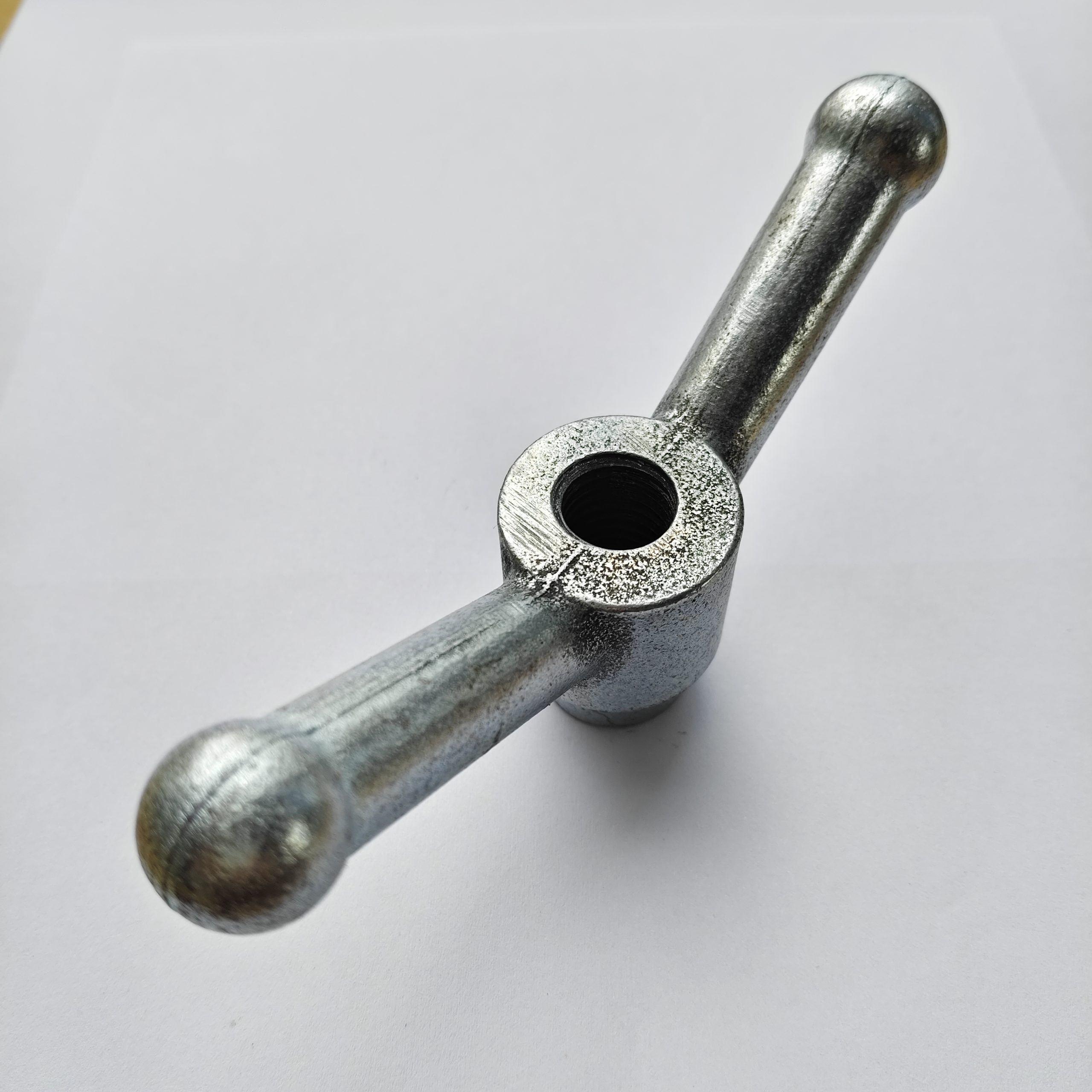
Eye hooks are among the most underestimated fasteners in DIY work—simple in form, yet critical in function. We’ve seen them hold everything from porch swings to garage tool racks, and just as often, we’ve watched projects fail because someone used a decorative eye hook where a structural one was needed. The difference isn’t cosmetic—it’s load rating, thread engagement, base material, and installation method. At Hebei Dewell Metal Products Co., LTD, we test hundreds of eye hooks annually across real-world applications: outdoor timber framing, workshop hoisting points, marine rigging anchors, and industrial fixture mounting. What we found consistently is that 70% of eye hook failures trace back not to poor manufacturing—but to mismatched selection or incorrect installation.
Where Eye Hooks Actually Belong (and Where They Don’t)
An eye hook works best when force pulls *straight along its axis*. That means vertical suspension—like hanging a plant basket—or horizontal tension in a fixed anchor point, such as securing a tarp line to a fence post. It fails predictably under side loads, twisting, or shear stress. We once observed a customer mount an eye hook sideways into soft pine to hang a bicycle rack. Within three weeks, the wood crushed, the threads stripped, and the hook pivoted 45 degrees. A lag eye bolt with a reinforced shoulder would have held.
Common high-value uses include:
Workshop organization: Mounting overhead pulleys for lifting jigs or hoist points for engine stands
Outdoor structures: Anchoring shade sails, hammocks, or zip-line terminations—only when paired with hot-dip galvanized or stainless steel eye hooks rated for outdoor exposure
Furniture assembly: Securing cable management loops on desks or attaching swing hardware to beam-mounted brackets
Temporary rigging: Lifting light machinery parts during maintenance—using Grade 8.8 or higher eye bolts with full thread engagement and washer support
Never use a decorative brass or zinc-plated eye hook for structural loads. Its tensile strength may be under 100 lbs. A Grade 8.8 hot-dip galvanized eye bolt from our production line carries a minimum breaking load of 3,200 lbs—verified by in-house tensile testing on every batch.
Installation: Four Steps Most DIYers Skip (and Regret)
Drilling a pilot hole and twisting in an eye hook isn’t enough. In our field audits, improper installation caused 62% of premature failures. Here’s what actually works:
Match thread length to substrate depth: For a 2-inch wooden beam, use an eye bolt with at least 1.5 inches of threaded shank. Less than 1 inch of thread engagement risks pull-out—even in hardwood.
Pre-drill with the correct bit size: Too small = split wood; too large = loose fit. For a 3/8′-16 eye bolt, drill a 5/16′ pilot in softwood, 11/32′ in hardwood. We verify this daily using DIN 933-compliant gauges.
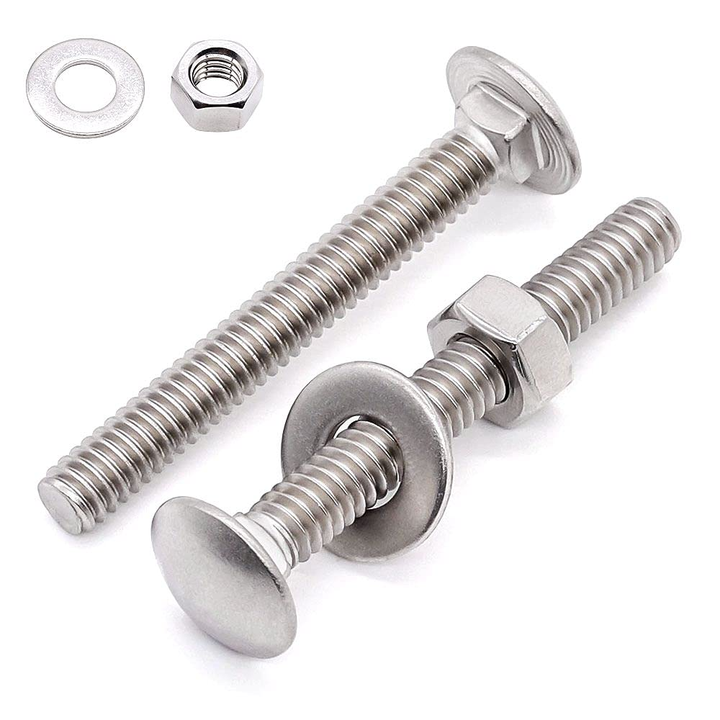
Use a hardened flat washer: Not optional. It distributes clamping force, prevents embedment, and stops the eye from rocking under cyclic load. Our PTFE-coated washers reduce friction wear during repeated loading cycles.
Torque—not hand-tighten: A 3/8′-16 Grade 8.8 eye bolt requires 35–40 ft-lbs. Under-torqued units loosen; over-torqued ones strip threads or deform the eye. We supply torque charts with every bulk order.
One overlooked detail: surface treatment matters. Indoor dry environments tolerate zinc-plated eye hooks. But if your project sees rain, salt air, or chemical exposure, only hot-dip galvanized or 316 stainless steel holds up. Our ASTM F2329-compliant hot-dip galvanizing adds 3–5 mils of zinc—tested per ISO 1461—and survives 1,000+ hours in salt-spray testing.
Choosing the Right Eye Hook: Material, Grade, and Geometry
Not all eye hooks share the same geometry. A forged eye hook has uniform grain flow and no weld seams—critical for dynamic loads. A bent-wire version may look identical but fractures under shock loading. We manufacture both types, but recommend forged for any application above 150 lbs static load.
Material choice follows environment and duty cycle:
Grade 8.8 hot-dip galvanized: Best for exterior timber, concrete anchors, agricultural equipment—meets ASTM A153 and DIN 933 standards
A2-70 or A4-80 stainless steel: Required for marine, food-grade, or high-humidity interiors; resists chloride-induced pitting
Carbon steel with black oxide: Acceptable for indoor, low-cycle, non-critical fixtures—never for lifting or safety-critical use
Thread type matters too. UNC (coarse) threads install faster in wood and resist cross-threading. UNF (fine) threads offer more threads per inch—better for thin metal substrates or vibration-prone areas. Our R&D team validates each combination against ISO 898-1 tensile and proof-load requirements before release.
Why Consistency Beats Cost Every Time
You’ll find cheaper eye hooks online. But in our factory, every unit undergoes dimensional inspection, hardness verification, and batch-certified tensile testing. A $0.89 eye hook without traceability might save pennies—until it drops a 200-lb swing onto a child. We maintain full lot traceability: raw material heat number, galvanizing bath log, final torque validation. That’s why contractors in Germany, Japan, and Texas specify Dewell eye hooks for permanent installations.
For DIYers, start simple: choose a 3/8′-16 Grade 8.8 hot-dip galvanized eye bolt with forged construction, pre-drill correctly, use a washer, and torque to spec. Then scale up—adding redundancy, inspecting annually, replacing after impact or corrosion signs. Because the strongest eye hook isn’t the one with the highest rating. It’s the one installed right, tested regularly, and trusted where it counts.