Customise or customize? Both spellings work—but your digital experience shouldn’t hinge on regional English preferences. It should hinge on precision, control, and real-world adaptability. We’ve seen too many engineering teams waste weeks tweaking software dashboards while their fastener inventory reports lag behind production schedules. In practice, effective digital customisation means aligning software logic with physical constraints—not just changing colours or rearranging widgets.
Start where the metal meets the machine
True customisation begins upstream: in material specs, thread tolerances, surface finish requirements. At Hebei Dewell Metal Products Co., LTD, every hot-dip galvanized hex bolt (Grade 8.8, DIN 933 compliant) carries traceable batch data—from raw wire tensile strength to post-galvanising coating thickness (≥65 µm). That data doesn’t live in isolation. When customers integrate our API-enabled order portal with their ERP, they don’t just “customize” fields—they map actual process parameters: heat treatment cycle ID, salt-spray test duration, dimensional deviation logs. This isn’t UI personalisation. It’s operational synchronisation.
We built this capability because clients kept asking the same question: “Can your system reflect that our ASTM Grade 5 shear bolt order requires zinc-nickel plating instead of standard yellow passivation—and auto-flag if stock uses the wrong finish?” Yes. But only if the digital layer mirrors physical reality. That means customising at the schema level—not the display layer.
Three non-negotiables for industrial-grade customisation
Parameter rigidity over interface flexibility: A dropdown menu labelled “Finish Type” fails when “Zn-Ni 12–15 µm, Cr(VI)-free” must trigger specific packaging, documentation, and shipping labels. We hardcode these as discrete, auditable fields—not user-editable text boxes. Standard-compliant extensibility: Custom SKUs must inherit core validation rules. If a stainless steel dowel pin (A2-70, Ø6×30 mm) gets modified to include a laser-etched lot code, the system still enforces ISO 2768-mK tolerance checks and automatically generates the correct Certificate of Conformance. Lead-time-aware logic: “Customize” shouldn’t mean “wait”. Our platform pre-validates feasibility: if a request for PTFE-coated wave washers exceeds available coating line capacity during Q3, it surfaces alternatives—like switching to in-stock silicone-filled variants—with identical load curves—before the PO is submitted. Why most “customisation” fails in procurement systems
Some might argue: “Just use low-code tools. Drag, drop, deploy.” But we’ve watched three clients abandon those platforms after six months. Why? Because drag-and-drop builders can’t enforce DIN 933 thread pitch tolerances or auto-reject a “custom” stainless bolt spec that violates ASTM F593 yield strength minimums. They treat fasteners as generic line items—not engineered components with interdependent mechanical, chemical, and regulatory boundaries.
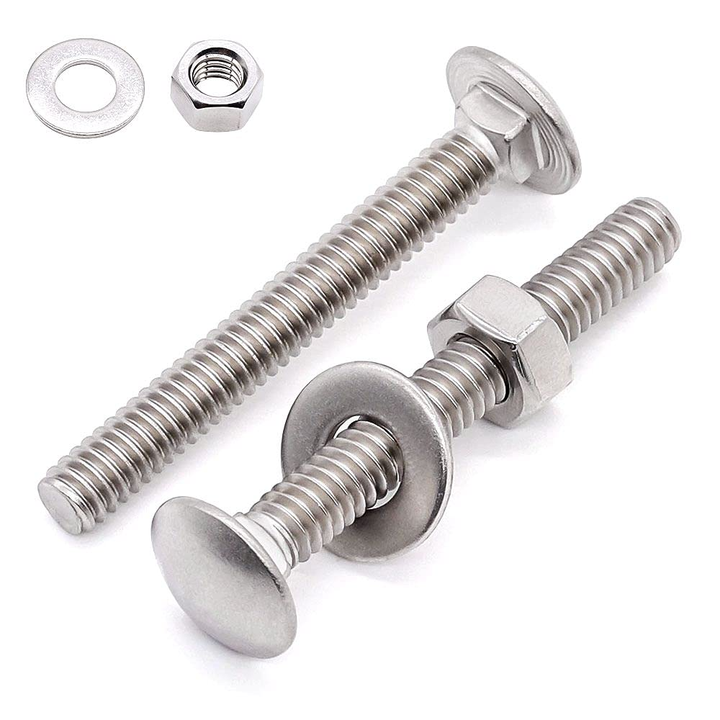
Real customisation accepts limits. It knows that “customise” doesn’t mean “ignore standards”. It means building guardrails into the workflow: if someone tries to assign Grade 10.9 strength to a non-heat-treated carriage bolt, the system blocks submission—and cites GB/T 3098.1 clause 7.2. That’s not restriction. It’s risk prevention.
How Hebei Dewell delivers actionable customisation—not just options
We don’t sell “customisable fasteners”. We deliver customised traceability. Every order—whether for 10,000 ASTM Grade 2 hex bolts or 500 bespoke cylindrical locating pins with client-specific hardness grading—gets a unique digital twin. That twin includes:
Raw material mill test reports linked to batch ID In-process CMM scan results for critical diameters Surface treatment verification (adhesion, thickness, corrosion resistance) Final dimensional certification against specified tolerances This isn’t data collection. It’s customisation with accountability. When a customer in Germany needs EN 10204 3.1 certification for structural bolts, our system auto-generates it—because the customisation happened at the data model level, not the PDF template.
Our 400+ SKUs aren’t static catalog entries. They’re parameterised templates. Need a shear bolt with extended thread length + custom head marking + RoHS-compliant packaging? The system calculates impact on lead time (adds 2 days), flags required tooling changes, and confirms compatibility with existing inventory buffers—all before quoting.
Customise wisely—where it moves metal, not just pixels
The strongest digital customisation feels invisible. You don’t notice the UI tweaks. You notice the delivery arrives on day 17—not day 23—because the system auto-rescheduled galvanising based on real-time line status. You notice zero rework on-site because the stainless nut you ordered actually meets A4-80 tensile strength—not just the label says so.
So choose tools that let you customise the physics, not just the fonts. Demand systems where “customise” and “customize” both resolve to the same outcome: faster decisions, fewer errors, and hardware that performs exactly as specified. That’s how you turn digital flexibility into mechanical reliability.
Explore our configurable fastener solutions—and see how deep customisation goes when it starts with steel, not software: dewellfastener.com.