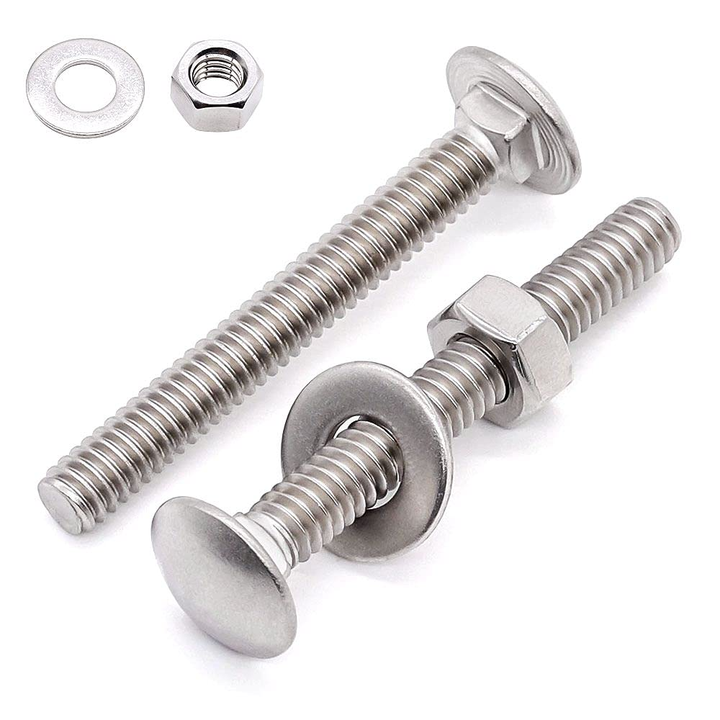
An M20 hex nut is a standard hexagonal fastener designed to mate with an M20 bolt, featuring a 20mm metric thread diameter. Typically manufactured from carbon steel or stainless steel, it adheres to international standards such as DIN 934, ISO 4032, and ASTM A194. These nuts are critical in heavy-duty structural, automotive, and industrial applications where high tensile strength and vibration resistance are required. Sourcing from a certified manufacturer ensures precise thread tolerance, consistent material grade, and reliable surface treatment for corrosion protection.
What Is an M20 Hex Nut? Technical Specifications and Standards
The M20 hex nut is a fundamental component in mechanical assembly, engineered to secure joints under significant load. The “M” denotes a metric thread profile, while “20” specifies the nominal outer diameter of the thread in millimeters. Understanding the technical nuances of this fastener is essential for engineers, procurement specialists, and construction managers who prioritize structural integrity.
Key Dimensional Parameters
For an M20 nut to function correctly, it must meet strict dimensional tolerances. Deviations can lead to thread stripping, improper torque application, or joint failure. The primary dimensions include:
- Nominal Diameter (d): 20 mm. This is the major diameter of the internal thread.
- Thread Pitch (P): The standard coarse pitch for M20 is 2.5 mm. Fine pitch variants (e.g., M20x1.5 or M20x2.0) exist for specialized applications requiring higher precision or vibration resistance.
- Width Across Flats (s): Typically 30 mm for standard heavy hex nuts, allowing compatibility with standard wrench sizes.
- Height (m): Varies by type. Standard hex nuts (DIN 934) usually have a height of approximately 18 mm, while thin nuts are shorter, and heavy hex nuts are taller to provide more thread engagement.
International Manufacturing Standards
Global trade and engineering projects require adherence to recognized standards. An M20 hex nut produced by a reputable manufacturer like Hebei Dewell Metal Products Co., LTD will typically comply with one or more of the following:
| Standard |
Region/Origin |
Description |
| DIN 934 |
Germany/Europe |
Standard hex nut, coarse thread. Widely used in European machinery and construction. |
| ISO 4032 |
International |
The global equivalent of DIN 934, ensuring interoperability across borders. |
| ASTM A194 |
USA |
Specification for alloy steel and stainless steel bolting materials for high-pressure or high-temperature service. |
| JIS B 1181 |
Japan |
Japanese Industrial Standard for hex nuts, often required in Asian manufacturing sectors. |
| GB/T 6170 |
China |
Chinese national standard for Type 1 hex nuts, aligning closely with ISO specifications. |
Adhering to these standards ensures that the M20 hex nut can be seamlessly integrated into assemblies regardless of the origin of the mating bolt. At Hebei Dewell, production is strictly organized according to these national and international standards, ensuring that every batch meets the rigorous demands of global markets including Europe, America, and Southeast Asia.
Material Grades and Mechanical Properties
Selecting the correct material grade for an M20 hex nut is as critical as choosing the right size. The material determines the nut’s strength, corrosion resistance, and suitability for specific environmental conditions. Using a low-grade nut on a high-tensile bolt can result in catastrophic failure, as the nut may strip before the bolt yields.
Carbon Steel Nuts: Strength and Versatility
Carbon steel is the most common material for general-purpose M20 hex nuts. They are categorized by property classes, which indicate their mechanical performance:
- Class 5 / Grade 5: Medium carbon steel, quenched and tempered. Suitable for general construction and non-critical automotive applications.
- Class 8 / Grade 8: High-carbon steel, quenched and tempered. Offers higher tensile strength and is used in heavy machinery and structural steelwork.
- Class 10 / Grade 10: Very high strength, often used in conjunction with Class 10.9 bolts. Ideal for high-stress environments.
Stainless Steel Nuts: Corrosion Resistance
For applications exposed to moisture, chemicals, or extreme temperatures, stainless steel M20 hex nuts are the preferred choice. Common grades include:
- A2-70 (304 Stainless Steel): Offers good corrosion resistance and moderate strength. Suitable for outdoor structures and food processing equipment.
- A4-80 (316 Stainless Steel): Provides superior resistance to chlorides and acids. Essential for marine environments, chemical plants, and coastal infrastructure.
Alloy Steel and High-Temperature Applications
In power generation and petrochemical industries, M20 nuts must withstand extreme heat and pressure. Alloy steel nuts, compliant with ASTM A194 Grade 2H or 7, are heat-treated to maintain structural integrity at elevated temperatures. Hebei Dewell’s R&D departments continuously monitor material science advancements to ensure our alloy products meet these demanding specifications.
Surface Treatments and Coatings for Durability
The longevity of an M20 hex nut is heavily influenced by its surface treatment. Without proper coating, even high-grade steel is susceptible to oxidation and rust, which can seize threads and weaken the joint. Manufacturers employ various finishing techniques to enhance durability and aesthetic appeal.
Zinc Plating (Electroplating)
Zinc plating is a cost-effective solution for indoor or mild outdoor environments. It provides a shiny, smooth finish and moderate corrosion resistance. However, it is not suitable for highly corrosive environments due to the thinness of the coating.
Hot-Dip Galvanizing (HDG)
For outdoor structural applications, such as bridges and transmission towers, hot-dip galvanizing is the industry standard. The nuts are immersed in molten zinc, creating a thick, rugged coating that offers exceptional protection against rust. Note that HDG increases the dimensions slightly, so taps must be oversized to accommodate the coating thickness.
Dacromet and Geomet Coatings
These advanced zinc-flake coatings provide superior corrosion resistance compared to traditional zinc plating, often exceeding 1000 hours in salt spray tests. They are ideal for automotive and precision engineering applications where dimensional accuracy and high performance are paramount.
Black Oxide and Phosphating
Black oxide provides minimal corrosion resistance but is often used for aesthetic purposes or as a base for oil impregnation. Phosphating creates a crystalline layer that improves paint adhesion and reduces friction during tightening, which is beneficial for high-speed assembly lines.
Hebei Dewell operates dedicated surface treatment plants, allowing us to control the quality of every finish in-house. This vertical integration ensures that our M20 hex nuts meet the specific environmental requirements of clients in Japan, South Korea, and beyond.
Common Applications of M20 Hex Nuts
The M20 hex nut is a workhorse in various industries due to its balance of size and load-bearing capacity. Its applications span from civil infrastructure to precision manufacturing.
Construction and Structural Steel
In steel structure construction, M20 nuts are frequently used with high-strength bolts to connect beams, columns, and trusses. They must withstand dynamic loads, wind forces, and seismic activity. Compliance with ASTM or EN standards is mandatory in these scenarios to ensure public safety.
Automotive and Transportation
Heavy vehicles, including trucks, buses, and railway cars, utilize M20 nuts in chassis assembly, suspension systems, and wheel hubs. Vibration resistance is critical here, often necessitating the use of locking mechanisms or nylon-insert lock nuts alongside standard hex nuts.
Energy and Power Generation
Wind turbines, oil rigs, and power plants rely on large quantities of M20 fasteners. In wind energy, these nuts secure tower sections and blade hubs, where maintenance access is difficult and costly. Therefore, high-quality materials and robust coatings like Dacromet are preferred to minimize lifecycle costs.
Machinery and Equipment Manufacturing
Industrial machines, from CNC lathes to conveyor systems, use M20 nuts for framing and component attachment. Precision and consistency are vital to ensure proper alignment and operation of moving parts.
How to Choose the Right M20 Hex Nut: A Buyer’s Guide
Selecting the appropriate M20 hex nut involves more than just matching the thread size. Procurement professionals must consider several factors to ensure optimal performance and cost-efficiency.
1. Match the Property Class to the Bolt
A fundamental rule in fastening is that the nut should be equal to or stronger than the bolt. If a Class 10.9 bolt is paired with a Class 5 nut, the nut will likely fail before the bolt reaches its full tension capacity. Always verify the mechanical property class required by your engineering specifications.
2. Consider the Environmental Conditions
Assess the exposure level of the application. For indoor, dry environments, zinc-plated carbon steel is sufficient. For outdoor, marine, or chemical environments, invest in stainless steel (A4-80) or hot-dip galvanized options to prevent premature failure due to corrosion.
3. Determine the Need for Locking Features
If the joint is subject to vibration or dynamic loading, a standard hex nut may loosen over time. In such cases, consider using M20 lock nuts (nylon insert or all-metal) or pairing standard nuts with spring washers. Hebei Dewell offers a wide range of locking solutions to complement our standard hex nut inventory.
4. Verify Certification and Traceability
For critical applications, always request material test reports (MTRs) and certificates of compliance. Reputable manufacturers like Hebei Dewell provide full traceability, ensuring that every batch of M20 nuts can be traced back to its raw material source and production parameters.
Why Partner with Hebei Dewell Metal Products Co., LTD?
In the competitive landscape of fastener manufacturing, Hebei Dewell Metal Products Co., LTD stands out as a reliable partner for global buyers. Located in Yongnian District, Handan City, Hebei Province—the largest standard parts distribution center in China—we leverage strategic geographic advantages and robust industrial infrastructure.
Integrated Production and R&D Capabilities
Established in 2015, Dewell has grown into a modern enterprise integrating science, industry, and trade. Our facility spans over 10 acres and houses more than 60 large-scale production units. Unlike trading companies, we control the entire manufacturing process, from raw material selection to final packaging. Our two dedicated R&D departments continuously innovate production techniques, ensuring our M20 hex nuts meet evolving international standards.
Quality Assurance and Global Reach
We adhere to the philosophy of “integrity first, quality first.” With total assets of 130 million yuan and over 100 employees, we have the capacity to handle large-volume wholesale orders without compromising on quality. Our products are exported to Japan, South Korea, Europe, America, and Southeast Asia, reflecting our ability to meet diverse regional requirements. We have established over 30 sales and service outlets nationwide, ensuring responsive support for domestic and international clients.
Comprehensive Product Range
Beyond M20 hex nuts, we produce over 400 varieties of fasteners, including bolts, stamped parts, and custom components. This breadth allows us to serve as a one-stop supplier for complex projects, reducing logistical complexity for our partners. Our container freight transfer stations facilitate efficient logistics, ensuring timely delivery to ports worldwide.
Frequently Asked Questions (FAQ) About M20 Hex Nuts
What is the torque specification for an M20 hex nut?
Torque values depend on the material grade, lubrication, and surface finish. For a standard Class 8.8 M20 bolt and nut assembly, the typical tightening torque ranges from 300 to 400 Nm. However, always consult the specific engineering guidelines for your project, as over-torquing can strip threads or stretch the bolt.
Can I use an M20 nut with an M20x1.5 bolt?
No. An standard M20 nut has a coarse pitch of 2.5 mm. It will not fit an M20x1.5 fine-pitch bolt. You must specify the pitch when ordering. If you require a fine-pitch nut, explicitly request “M20x1.5” or “M20x2.0” to ensure thread compatibility.
What is the difference between a hex nut and a lock nut?
A standard hex nut relies on friction and preload to stay in place. A lock nut incorporates a design feature, such as a nylon insert or a distorted thread, to resist loosening under vibration. For static loads, a hex nut is sufficient. For dynamic loads, a lock nut is recommended.
How do I prevent galvanic corrosion when using stainless steel nuts?
Galvanic corrosion occurs when dissimilar metals are in contact in the presence of an electrolyte. To prevent this, avoid pairing stainless steel nuts with carbon steel bolts unless properly insulated. Using compatible materials (stainless with stainless, or carbon with carbon) is the best practice. If mixing is necessary, use dielectric grease or insulating washers.
Does Hebei Dewell offer custom packaging for wholesale orders?
Yes. We understand that branding and packaging efficiency are crucial for distributors. We offer customizable packaging solutions, including branded boxes, palletization, and bulk bagging, to suit your logistical and marketing needs.
Conclusion: Securing Your Supply Chain with Quality M20 Hex Nuts
The M20 hex nut is a small component with a massive impact on structural safety and operational efficiency. Whether you are constructing a bridge, assembling heavy machinery, or manufacturing consumer goods, the reliability of your fasteners cannot be compromised. Choosing the right material, grade, and surface treatment is essential, but partnering with a trustworthy manufacturer is equally critical.
Hebei Dewell Metal Products Co., LTD combines decades of industry expertise with modern manufacturing capabilities to deliver M20 hex nuts that meet the highest global standards. From our state-of-the-art facilities in Hebei to your doorstep, we ensure quality, consistency, and competitive wholesale pricing. Our commitment to “promoting the spirit of screws and bringing standards to the industry” drives us to exceed customer expectations in every shipment.
For businesses seeking a reliable supplier of M20 hex nuts and other fasteners, Dewell offers the perfect blend of scale, quality, and service. We invite engineers, procurement managers, and distributors to contact us for detailed specifications, sample requests, or wholesale quotes.
Ready to optimize your fastener supply chain? Contact Hebei Dewell today to discuss your M20 hex nut requirements and discover how our integrated manufacturing solutions can support your project’s success.
Explore Our Full Range of Fasteners and Technical Solutions