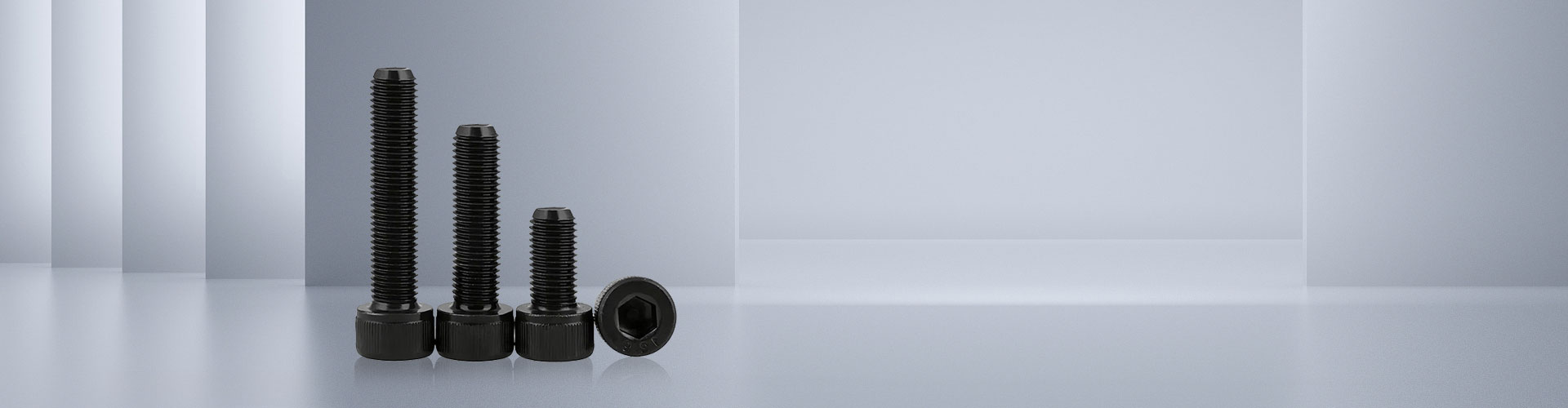
A hex head cap screw is a high-strength fastener featuring a six-sided head designed for wrench or socket drive, widely used to assemble machinery, structural frameworks, and heavy equipment. Characterized by its fully or partially threaded shank and precise dimensional tolerances, this component ensures reliable clamping force in demanding industrial applications. This comprehensive 2026 guide details types, sizing standards, material grades, and expert selection insights to help engineers and procurement specialists make informed decisions.
What Is a Hex Head Cap Screw and How Does It Work?
The hex head cap screw serves as a fundamental building block in modern mechanical assembly. Unlike standard bolts, these fasteners are engineered with tighter tolerances and higher strength requirements, often adhering to strict international standards like ISO, DIN, or ASME. The defining feature is the hexagonal head, which provides six contact points for torque application, allowing for greater tightening force compared to square or slotted heads.
These fasteners function by converting rotational torque into axial tension. When tightened, the threads engage with a nut or a tapped hole, creating a clamp load that holds components together. The integrity of this connection relies on the material grade and the precision of the thread pitch. In critical applications, such as automotive engines or aerospace structures, the failure of a single screw can lead to catastrophic system breakdowns.
Industry professionals distinguish cap screws from general-purpose bolts based on their intended use and manufacturing quality. Cap screws are typically used in machine tools and precision equipment where alignment and high tensile strength are paramount. The design minimizes stress concentrations, ensuring longevity even under cyclic loading conditions common in vibrating environments.
Key Types of Hex Head Cap Screws
Understanding the specific variations of hex head cap screws is crucial for selecting the right component for your project. While the external geometry remains consistent, internal specifications vary significantly based on application needs. The primary differentiation lies in threading patterns, head styles, and drive mechanisms.
Fully Threaded vs. Partially Threaded Designs
The distribution of threads along the shank determines the screw’s mechanical behavior under load. Choosing between fully and partially threaded options depends on whether shear strength or tensile grip is the priority.
- Fully Threaded: These screws have threads extending from the head to the tip. They are ideal for applications where the entire length of the screw must engage with a nut or tapped hole, providing maximum adjustment range and uniform grip.
- Partially Threaded: Featuring an unthreaded shank section near the head, these designs offer superior shear strength. The smooth shank fits precisely into reamed holes, preventing lateral movement and reducing the risk of fatigue failure in dynamic loads.
Engineering best practices suggest using partially threaded screws when aligning two plates where precise positioning is required before tightening. Conversely, fully threaded variants are preferred for blind holes or situations requiring deep engagement without a predefined grip length.
Standard Hex vs. Flanged Hex Heads
The geometry of the head influences how load is distributed across the mating surface. Standard hex heads require separate washers to distribute pressure, whereas flanged versions integrate this feature.
- Standard Hex Head: Offers a compact profile suitable for tight spaces. It requires a separate flat washer to prevent surface damage and distribute the clamp load evenly.
- Flanged Hex Head: Incorporates a built-in circular bearing surface beneath the head. This design eliminates the need for a separate washer, speeds up assembly, and provides better resistance to loosening due to the increased contact area.
In high-vibration environments, the flanged variant often provides enhanced stability. However, standard heads remain the industry choice for applications requiring frequent disassembly or where space constraints prohibit the wider diameter of a flange.
Hex Head Cap Screw Sizes and Dimensional Standards
Navigating the complex landscape of fastener sizing requires familiarity with both metric and imperial systems. Global supply chains often demand interoperability between these standards, making it essential to understand conversion factors and dimensional equivalents.
Metric Sizing (ISO/DIN Standards)
The metric system, governed primarily by ISO 4014 and ISO 4017, uses millimeters to define diameter and pitch. The designation “M” followed by a number indicates the nominal outer diameter. For instance, an M10 screw has a 10mm outer diameter.
Pitch, or the distance between threads, is equally critical. Coarse pitches (e.g., M10 x 1.5) are standard for general assembly, offering faster installation and resistance to cross-threading. Fine pitches (e.g., M10 x 1.25) provide greater tensile strength and are used in precision adjustments or thin-walled materials where coarse threads might strip.
Imperial Sizing (UNC/UNF Standards)
In the United States and specific legacy industries, inch-based sizes prevail. These are defined by fractional diameters and threads per inch (TPI). Unified National Coarse (UNC) and Unified National Fine (UNF) are the dominant series.
Common sizes range from small #4 screws up to large 1-inch diameters and beyond. Unlike metric sizing, imperial lengths are often specified in fractions of an inch. Proper identification requires calipers and thread gauges, as visual estimation can lead to costly mismatches in critical assemblies.
Comprehensive Size Reference Table
The following table outlines common dimensions for quick reference, aiding in the selection process for both metric and imperial requirements.
| System |
Nominal Size |
Thread Pitch / TPI |
Wrench Size (Across Flats) |
Typical Application |
| Metric |
M6 |
1.0 mm |
10 mm |
Light machinery, electronics enclosures |
| Metric |
M8 |
1.25 mm |
13 mm |
Automotive components, structural frames |
| Metric |
M10 |
1.5 mm |
16 mm |
Heavy equipment, engine mounts |
| Imperial |
1/4″-20 |
20 TPI (UNC) |
7/16″ |
General purpose assembly, HVAC |
| Imperial |
3/8″-16 |
16 TPI (UNC) |
9/16″ |
Construction, agricultural machinery |
| Imperial |
1/2″-13 |
13 TPI (UNC) |
3/4″ |
Structural steel connections, bridges |
It is vital to note that wrench sizes do not always correlate linearly with screw diameter. Always consult the specific manufacturer’s data sheet or relevant ISO/ASME standards to confirm tooling requirements before beginning assembly.
Material Grades and Strength Classifications
The performance envelope of a hex head cap screw is dictated by its material composition and heat treatment. Selecting the wrong grade can result in premature failure, while over-specifying can lead to unnecessary costs and brittleness.
Metric Property Classes
Metric fasteners are categorized by property classes, indicated by two numbers separated by a decimal point (e.g., 8.8, 10.9, 12.9). The first number represents 1/100 of the ultimate tensile strength in MPa, while the second indicates the yield strength ratio.
- Class 8.8: Considered high strength, commonly made from medium carbon steel. Suitable for most general industrial applications including railroad tracks and heavy machinery.
- Class 10.9: Alloy steel, quenched and tempered. Used in high-stress environments like suspension systems and engine components where higher preload is necessary.
- Class 12.9: The highest standard strength class. Made from alloy steel with rigorous heat treatment. Reserved for critical safety applications but requires careful handling to avoid hydrogen embrittlement.
Imperial Grade System
In the imperial system, grades are marked by radial lines on the bolt head. Grade 2 has no marks, Grade 5 has three lines, and Grade 8 has six lines. Higher grades indicate greater tensile and yield strengths.
Grade 5 fasteners are medium carbon steel, suitable for automotive and general construction. Grade 8 fasteners are medium carbon alloy steel, quenched and tempered, offering the highest strength for demanding applications such as hydraulic equipment and heavy truck assemblies.
Corrosion Resistance and Specialty Materials
For environments exposed to moisture, chemicals, or extreme temperatures, standard steel is insufficient. Stainless steel grades like A2 (304) and A4 (316) provide excellent corrosion resistance. A4 is specifically recommended for marine environments due to its molybdenum content.
In highly specialized sectors, titanium or brass hex head cap screws may be utilized. Titanium offers an exceptional strength-to-weight ratio and biocompatibility, making it ideal for aerospace and medical devices. Brass provides good electrical conductivity and corrosion resistance for plumbing and electrical grounding applications.
Step-by-Step Installation Guide
Proper installation is as critical as component selection. Even the highest-grade hex head cap screw will fail if installed incorrectly. Following a systematic approach ensures optimal clamp load and joint integrity.
Preparation and Inspection
Before installation, inspect both the screw and the receiving hole. Ensure threads are clean, free of debris, and undamaged. Verify that the hole diameter matches the screw specification; a hole that is too small causes binding, while one that is too large reduces shear strength.
Cleanliness is paramount. Remove any oil, grease, or rust from the mating surfaces. If lubrication is required for torque accuracy, apply a consistent layer of approved thread lubricant, keeping in mind that lubrication significantly affects the torque-tension relationship.
Torquing Procedure
Use a calibrated torque wrench appropriate for the expected value. Never estimate torque by feel, as human perception is notoriously inaccurate for critical fasteners.
- Step 1: Hand-tighten the screw until the head contacts the surface to ensure proper thread engagement and avoid cross-threading.
- Step 2: Apply an initial “snug” torque (approximately 30% of final value) to seat the joint and align components.
- Step 3: Tighten to the final specified torque value in a star or crisscross pattern if multiple screws are used. This ensures even pressure distribution across the joint.
- Step 4: For critical applications, perform a second pass after a short settling period to account for material relaxation.
Adhering to the manufacturer’s torque specifications is non-negotiable. Over-torquing can stretch the screw beyond its yield point, leading to immediate or delayed fracture. Under-torquing results in insufficient clamp load, allowing the joint to loosen under vibration.
Advantages and Limitations Analysis
Evaluating the pros and cons of hex head cap screws helps determine their suitability for specific engineering challenges. While they are the industry standard for many applications, alternative drive types or head styles may be preferable in niche scenarios.
Core Advantages
- High Torque Capacity: The six-sided geometry allows for significant torque application without rounding off, provided the correct tool is used.
- Tool Availability: Wrenches and sockets for hex heads are universally available, simplifying maintenance and repair operations globally.
- Versatility: Available in a vast range of sizes, materials, and coatings, making them adaptable to nearly any environment.
- Cost-Effectiveness: Mass production techniques keep unit costs low, making them economical for large-scale projects.
Potential Limitations
- Space Requirements: The swing arc required for a wrench or socket can be larger than that for internal drive screws (like Allen or Torx), posing challenges in confined spaces.
- Head Profile: The protruding head may interfere with aerodynamic flows or aesthetic designs where flush surfaces are required.
- Rounding Risk: Using worn or incorrect tools can round off the corners of the head, rendering the fastener difficult to remove.
Despite these limitations, the balance of strength, ease of use, and availability keeps the hex head cap screw as the dominant choice in heavy industry and construction.
Common Applications Across Industries
The versatility of the hex head cap screw is evident in its widespread adoption across diverse sectors. Each industry leverages specific attributes of these fasteners to meet unique operational demands.
Automotive and Transportation
In the automotive sector, these screws secure engine blocks, suspension components, and chassis frames. High-strength Grade 8 or Class 10.9 fasteners are mandatory here to withstand intense vibrations and dynamic loads. Safety-critical connections often utilize prevailing torque nuts or thread-locking compounds alongside these screws.
Construction and Infrastructure
Structural steel connections in buildings and bridges rely heavily on large-diameter hex head cap screws. These fasteners must endure static loads from the structure’s weight and dynamic loads from wind or seismic activity. Galvanized or weathered steel coatings are standard to protect against decades of environmental exposure.
Manufacturing and Machinery
Precision machinery utilizes these components for assembling gearboxes, conveyor systems, and robotic arms. Here, dimensional accuracy is key. Partially threaded screws are frequently used to ensure precise alignment of rotating parts, minimizing runout and vibration during operation.
Frequently Asked Questions (FAQ)
Addressing common queries helps clarify misconceptions and aids in the rapid selection of the correct fastener for your needs.
What is the difference between a hex bolt and a hex head cap screw?
While often used interchangeably in casual conversation, there is a technical distinction. A hex head cap screw generally implies a higher quality product with tighter tolerances, a chamfered point, and is intended for use in tapped holes or with nuts in precision machinery. A hex bolt may have looser tolerances, a non-chamfered end, and is often used for simpler structural connections. However, modern standards have blurred these lines, and specification by grade and dimension is more important than nomenclature.
How do I prevent hex head cap screws from loosening due to vibration?
Vibration-induced loosening is a common failure mode. Effective prevention methods include using lock washers, applying thread-locking adhesives (such as Loctite), or utilizing self-locking nuts with nylon inserts. In extreme cases, safety wire or tab washers provide a mechanical lock that physically prevents rotation.
Can I mix different grades of hex head cap screws in the same joint?
No, mixing grades within a single joint is strongly discouraged. Different grades have different elastic properties and yield strengths. Under load, the softer (lower grade) fasteners will deform first, transferring excessive load to the harder fasteners, leading to uneven stress distribution and potential joint failure. Always use uniform grading throughout a connection.
What coating should I choose for outdoor applications?
For outdoor use, corrosion protection is essential. Zinc plating offers basic protection for mild environments. For harsher conditions, hot-dip galvanizing provides a thick, durable zinc layer. In coastal or chemical-heavy environments, stainless steel (316/A4) is the preferred choice despite the higher cost, as it resists pitting and crevice corrosion effectively.
Industry Leader Spotlight: Hebei Dewell Metal Products Co., LTD
Selecting the right fastener is only half the battle; sourcing from a reliable manufacturer is equally critical. In the heart of Yongnian District, Handan City—known as China’s largest standard parts distribution center—stands Hebei Dewell Metal Products Co., LTD. Established in 2015, Dewell has grown into a modern enterprise integrating science, industry, and trade, dedicated to the research, development, and production of high-quality fasteners.
With a factory spanning over 10 acres and equipped with more than 60 large-scale production units, Dewell manufactures an extensive range of products, including bolts, nuts, and stamped parts. Their portfolio boasts over 400 varieties, strictly produced according to national and international standards to ensure excellence and perfection. The company’s commitment to “quality first, customer first, and reputation first” has earned them a robust network of over 30 sales and service outlets nationwide, with exports reaching Japan, South Korea, Europe, the Americas, and Southeast Asia.
Dewell distinguishes itself through its comprehensive infrastructure, which includes container freight transfer stations and advanced surface treatment plants, ensuring timely delivery and superior finish quality. Supported by two dedicated R&D departments and a team of over 100 employees, the company embodies the spirit of “promoting the spirit of screws and bringing standards to the industry.” Whether for domestic infrastructure projects or global supply chains, Hebei Dewell Metal Products Co., LTD stands ready to partner with clients worldwide, aiming to be based in Hebei, serve the whole country, and enter the world stage.
Expert Insights for 2026 and Beyond
As we move towards 2026, the fastener industry is evolving to meet new challenges in sustainability and digitalization. Supply chain resilience has become a priority, with manufacturers like Dewell diversifying sourcing to mitigate disruptions. There is a growing trend towards traceability, where QR codes or laser marking on high-value hex head cap screws allow for full lifecycle tracking from production to installation.
Material science continues to advance, with new alloy formulations offering higher strength-to-weight ratios. This is particularly relevant for the electric vehicle (EV) sector, where reducing overall vehicle mass is critical for extending battery range. Engineers are increasingly specifying lighter, stronger fasteners that maintain safety margins while contributing to efficiency goals.
Furthermore, automation in assembly lines is driving demand for fasteners with consistent geometric tolerances. Robotic insertion systems require screws that feed smoothly without jamming, pushing manufacturers to adhere to even stricter quality control protocols than those mandated by current ISO standards.
Conclusion and Selection Recommendations
Selecting the right hex head cap screw is a balance of understanding mechanical requirements, environmental conditions, and cost constraints. From the high-tensile demands of automotive engines to the corrosive challenges of marine infrastructure, these fasteners play a pivotal role in maintaining structural integrity.
This guide has outlined the critical distinctions between fully and partially threaded designs, clarified metric and imperial sizing, and detailed the importance of material grades. By adhering to proper installation techniques and leveraging the advantages of modern coatings, engineers can ensure long-lasting and reliable connections.
Who should use this information? Procurement managers, mechanical engineers, and maintenance technicians involved in industrial assembly will find these insights directly applicable to their daily operations. Whether you are specifying components for a new machine design or replacing worn parts in existing infrastructure, prioritizing quality and compatibility is essential.
For your next project, begin by defining the load requirements and environmental exposure. Consult the dimensional tables provided to select the correct size and verify the necessary tooling. When in doubt, opt for a higher material grade with appropriate corrosion protection rather than risking under-specification. Partnering with established manufacturers like Hebei Dewell Metal Products Co., LTD ensures access to premium products that meet rigorous global standards. Making informed choices today ensures the safety and durability of your assemblies for years to come.