You see this question pop up more often now, especially from engineers trying to balance performance with sustainability mandates. The immediate assumption is often that any plastic shim will do, or that ‘green’ automatically means biodegradable or compostable. That’s where the first mistake happens. In green tech applications—think solar tracker installations, wind turbine component alignment, or EV battery pack assembly—the material isn’t just filler; it’s a critical interface. It needs to withstand UV degradation, chemical exposure from electrolytes or cleaning agents, constant thermal cycling, and maintain its dimensional stability under load for decades. A failure here isn’t a minor inconvenience; it can lead to misalignment, stress fractures, or system inefficiency that completely undercuts the environmental benefit of the tech itself. So, the real question isn’t just about needing a plastic shim. It’s about specifying the right polymer for a hostile, long-life environment.

The Material Maze: It’s Never Just Plastic
Early on, we learned this the hard way. A client was assembling large solar mounting structures and used a common, commercially available nylon shim. On paper, it looked fine—good strength, decent wear resistance. But within 18 months in a desert installation, reports came in of shims cracking and deforming. The problem? Moisture absorption. Nylon sucks up water from the air, which changes its dimensions and reduces its stiffness over time. In that arid environment, the day-night thermal swing was pulling moisture in and out, causing it to creep. The alignment of the panels drifted, leading to a measurable dip in energy yield. That was a classic case of a material mismatch that looked right in the spec sheet but failed in the field.
That experience pushed us toward more stable engineering polymers. For outdoor, high-UV environments, we now almost always look at materials like durable plastic shims made from UHMW-PE (Ultra-High-Molecular-Weight Polyethylene) or certain grades of polypropylene. They have excellent chemical resistance, near-zero moisture absorption, and inherent lubricity which is great for installation and prevents galvanic corrosion when used between dissimilar metals. POM (Acetal) is another contender for its dimensional stability and stiffness, but you have to be careful with its long-term UV resistance—it often needs stabilization additives.
The key is to treat the shim as a wear component. You’re not just shimming for installation; you’re shimming for the 25-year service life of a solar farm or the 20-year life of a wind turbine gearbox. The polymer needs to resist cold flow (creep) under constant pressure. This is where datasheets fall short. You need to look at long-term compressive stress-strain curves at your operating temperature range, not just the short-term mechanical properties. Many suppliers can’t provide that data, which is a major red flag.
Why Metal Isn’t Always the Answer (And When It Is)
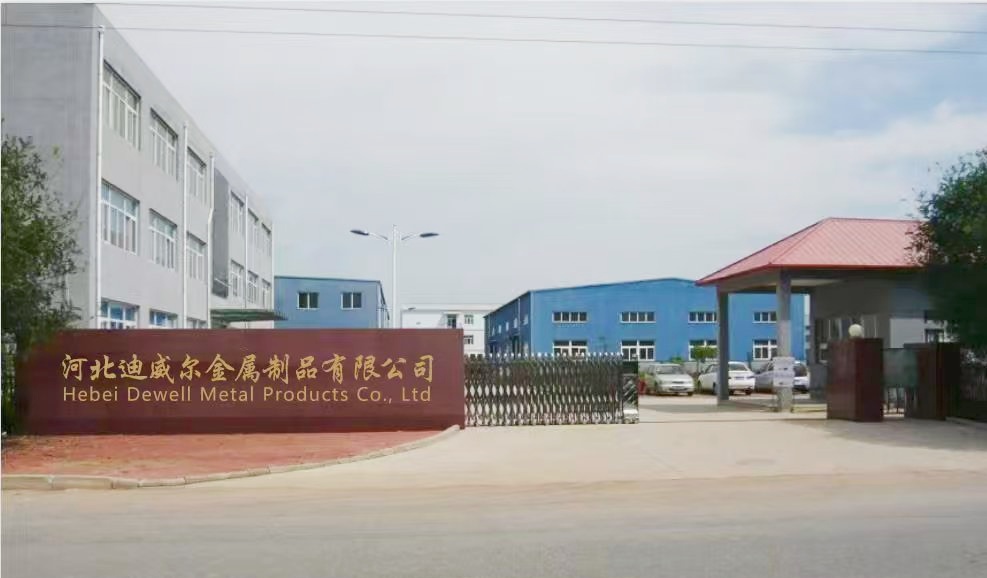
In the fastener and precision parts world, the default is often metal. It’s known, it’s strong, it’s testable. A company like Hebei Dewell Metal Products Co., Ltd (you can find their portfolio at https://www.dewellfastener.com) rightly built its reputation on metal fasteners and components. They’re a large enterprise in Yongnian, the heart of China’s standard parts industry, so they know metallurgy. But in green tech, the insulating property of plastic is non-negotiable in many cases. Using a metal shim in an EV battery module could create a stray current path or a thermal bridge, compromising safety and efficiency.
However, dismissing metal entirely is a mistake. There are hybrid approaches. Sometimes, a stainless steel shim with a polymer coating or laminate provides the perfect blend of compressive strength and electrical isolation. The challenge becomes sourcing a vendor who can handle both sides of that equation—the precision metalworking and the polymer application expertise. It’s a gap in the market. Most companies are specialists in one material domain.
This is where the conversation with a supplier gets real. When you’re talking to a metal-centric manufacturer, their instinct might be to offer a stamped stainless solution. You have to push the conversation toward the environmental and electrical requirements. Can they source or partner for the right polymer? Do they understand the aging tests required? A company like Dewell, with its R&D and production integration, is positioned to navigate this, but it requires the client to drive the specification beyond the traditional.
The Devil’s in the Details: Installation and Real-World Beating
Specifying the right material is only half the battle. How the shim is installed often determines its fate. I’ve seen beautifully specified UHMW-PE shims get mangled because the installation crew used an impact wrench to torque down the bolt, generating enough frictional heat to locally melt and deform the plastic. The shim material needs to be paired with the right installation protocol—often a controlled torque procedure.
Another overlooked detail is edge treatment. A shim cut with a sharp, clean edge will resist crack initiation far better than one with a ragged, stressed edge from a poor-quality stamping or cutting process. For thin shims, this is critical. You’re asking this tiny piece of plastic to handle point loads from bolt heads and distribute it evenly. A flawed edge is a failure point waiting to happen.
Then there’s the issue of tolerance stacking. In green tech assemblies, you might have a cast metal housing, a machined component, and your plastic shim. If the shim’s thickness tolerance is too loose, you either don’t achieve the required alignment or you over-stress the assembly trying to close a gap that’s too large. For critical interfaces, we moved to specifying shims with a tolerance of +/- 0.1mm or tighter, which often means moving away from cheap, bulk-produced shims to a more precision-focused supplier.

Sourcing and the Green Verification Headache
Everyone wants a sustainable product. But for a durable plastic shim, what does green actually mean? Is it recycled content? Is it a polymer derived from bio-sources? Is it just that it enables a green technology? This is a murky area. Using a shim with 30% post-consumer recycled content sounds great until you discover the recycled stream is inconsistent, compromising the polymer’s long-term weatherability. The failure risk is too high.
A more practical, and arguably more impactful, green approach is longevity. The greenest component is the one that never fails and never needs replacement, avoiding the carbon cost of a service call, a new part, and disposal. Therefore, specifying a virgin, high-performance polymer that guarantees the 25-year service life might have a better net environmental outcome than a shim with recycled content that fails in 10 years. This is an uncomfortable truth that runs counter to simple marketing claims.
When sourcing, you must interrogate the supply chain. Can the manufacturer provide batch-to-batch consistency certificates? Do they add UV stabilizers, anti-oxidants, and hydrolysis inhibitors for the specific application environment? For instance, in coastal wind turbines, resistance to salt spray corrosion is key for metals, but for plastics, you need to worry about salt-induced degradation of the polymer chains. Not all suppliers think on that level.
Case in Point: A Small Win and a Lingering Problem
We had a win with a client assembling power electronics for solar inverters. They needed a shim to isolate a heat sink from the chassis. They were using a cheap PVC washer that was thermally degrading and becoming conductive. We switched them to a precision-machined polyimide (PI) shim. It’s more expensive per piece, but it has a continuous operating temperature over 250°C, excellent dielectric strength, and doesn’t creep. The field failure rate for that assembly dropped to zero. The cost was absorbed by eliminating warranty repairs.
But here’s a lingering problem we haven’t perfectly solved: color. For quality control and safety, engineers often want color-coded shims for different thicknesses. However, the pigments used to color plastics can sometimes act as degradation agents, especially under UV exposure. A vibrant blue or red shim might look great in the factory but chalk and fade rapidly in the sun, potentially weakening it. Finding a supplier who uses UV-stable color masterbatches that are compatible with the base polymer is tougher than it sounds. Sometimes, the most reliable solution is to use natural (often white or off-white) material and rely on laser etching or printed labels for identification—adding another step and cost.
It circles back to the core idea: there’s no off-the-shelf perfect answer. The question is the start of a deep dive. You’re balancing polymer science, mechanical engineering, environmental chemistry, and supply chain reality. The right shim exists, but finding it requires moving past catalog shopping and into a collaborative specification process with a partner who gets both the material science and the end-use brutality. It’s a small component that holds up a very big, and very green, idea.