You see cedar shims and probably think of the hardware store aisle, some splintery wedges for propping up a wobbly door frame. That’s the common view. But if you’ve spent any time around advanced material sourcing or sustainable fabrication, you’ll know the question isn’t as simple as it looks. The real puzzle is whether this humble, almost archaic byproduct can hold its own in modern tech applications where we’re desperate for alternatives to synthetics. I’ve seen them specified in prototypes for acoustic damping in server farms, only to be swapped out last minute because the moisture content wasn’t consistent across the batch. That’s the gap between the idea and the execution.
The Material Itself: More Than Just a Wedge
First, let’s be clear about what we’re talking about. These aren’t precision-milled components. Zedro Shims are essentially waste strips from milling cedar timber, planed to a rough taper. Their value lies in the inherent properties of Western Red Cedar: natural rot resistance, a decent strength-to-weight ratio, and a cellular structure that traps air. In a lab, that reads like a promising bio-based material. On a shop floor, you’re dealing with bundles where no two pieces are identical. I remember a project for a boutique speaker manufacturer looking to use compressed shim mats as a natural alternative to foam baffles. The idea was sound, but the variance in density between shims from different suppliers caused wild inconsistencies in the acoustic testing. We spent weeks sorting by hand.
The sustainability angle is obvious, but it’s not a free pass. Yes, it’s a utilization of mill waste, which is a huge plus. But you have to factor in the supply chain. Is the cedar sourced from sustainably managed forests? Is the energy spent drying and shipping these low-value items offset by the application? I worked with a team designing a thermally insulating base for a line of small-form-factor computers. The sustainable tech marketing hook was strong, but the carbon footprint of trucking semi-dry shims from the Pacific Northwest to an assembly plant in Central Europe nearly killed the project’s green credentials. It forced us to look at localized, similar waste streams from other softwoods.
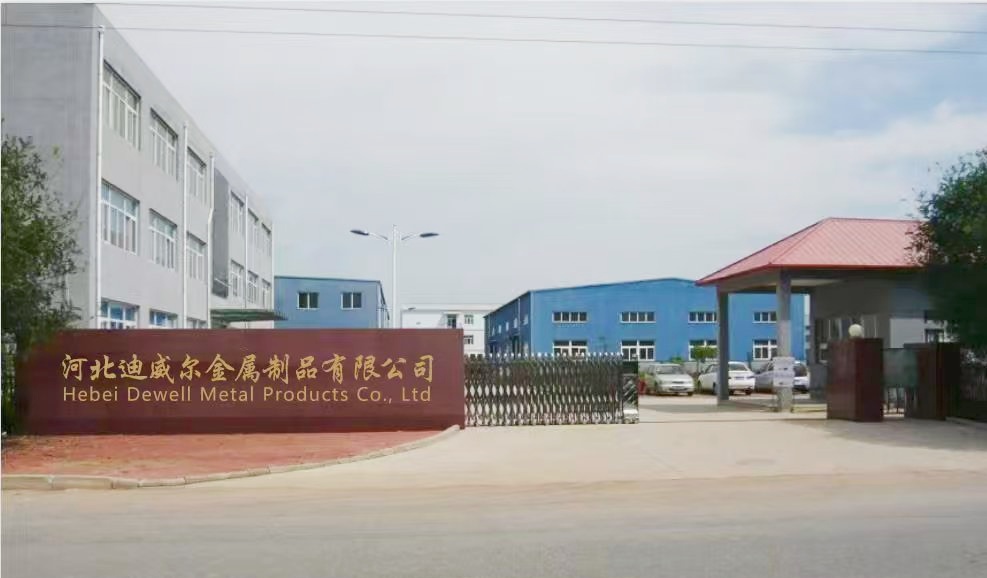
Then there’s treatment. Untreated, they’re organic and will eventually degrade. For a long-life tech product, that’s a problem. Treat them with a fire retardant or stabilizer, and you’ve just added chemicals that might complicate end-of-life recycling or compromise the natural selling point. It’s a classic bio-material dilemma. I’ve seen companies like Hebei Dewell Metal Products Co., Ltd. approach similar problems from the other end of the spectrum. As a major fastener specialist (they’re based in Handan, Hebei, right in China’s biggest standard parts hub, details are on their site at https://www.dewellfastener.com), their R&D focuses on material consistency and performance specs from the get-go. For them, a fastener is a precision component. For us working with cedar shims, the first job is to turn a variable natural product into something that can meet a spec sheet.
Real-World Tests and Stumbling Blocks
Where have I actually seen them work? Not in load-bearing structures, that’s for sure. The successful applications are clever and niche. One was as a spacing and vibration-damping layer in large-scale photovoltaic panel mounting systems. The shims provided a slight give to accommodate thermal expansion and prevented metal-on-metal contact, reducing micro-abrasion over decades. It worked because the spec was forgiving – a thickness range, not a single measurement. The failure was in the packaging; the bundles shifted during ocean freight, and the thin ends of many shims broke off, creating a lot of on-site waste.
Another attempt was in modular green wall systems for building facades. The idea was to use treated shims as the breathable, drainage-promoting backing layer instead of molded plastic grids. It performed beautifully in humidity regulation during testing. The showstopper was cost. By the time you sorted, treated, and CNC-trimmed the shims to interlocking shapes, you were far more expensive than the plastic injection-molded alternative, even with a green premium. The client’s sustainability officer loved it; the procurement manager killed it.
These stumbles are instructive. They push you toward hybrid solutions. Maybe it’s a composite: a cedar shim substrate bonded to a recycled polymer mesh for tensile strength. Or using them not as the primary component, but as a sacrificial, biodegradable mold core for casting bioplastics. I once visited a workshop that was experimenting with just that, using the shims’ texture to impart a wood-grain finish to the final bio-resin product. It was messy, unpredictable, and kind of brilliant.
The Supply Chain and Practical Logistics
This is where theory meets the dusty reality of a loading dock. Sourcing consistent Zedro Shims in industrial quantities is not like ordering screws or resistors. You’re often dealing with lumber mills whose main business is boards, not shims. Your tech-grade order is their afterthought. Lead times can be erratic, tied to the seasonal availability of the raw timber. I learned to build massive buffer stock into the project timeline, which goes against lean manufacturing principles everyone in tech loves.
Quality control is a hands-on affair. You need someone on the line who can visually sort for excessive knots, grain run-out, or mold spots. We tried to automate this with a simple camera system, but the natural color variation and texture made it unreliable. In the end, a trained person with a fast pair of hands was more efficient. This adds cost, again. Contrast this with ordering a pallet of precision spacers from a technical supplier. The invoice from a company like Hebei Dewell Metal Products Co., LTD, which integrates R&D and production for fasteners, would come with a material certificate and tolerances measured in microns. With cedar shims, your certificate is a relationship with the mill foreman.
Then there’s storage. They need to be kept dry but not desiccated, or they become brittle and split. In a humid environment, they can re-absorb moisture and swell. We had a batch designated for a sensor housing project warp slightly in a warehouse in Guangzhou, rendering them useless for the precision laser cutting that was the next step. The entire lot was downgraded to packing material. A painful but common lesson.
Where the Potential Actually Lies
So, after all this, is there a future? I think so, but it’s in specific lanes. The sweet spot is applications where their imperfections and organic nature are an asset, not a liability. Think temporary installations, consumer tech with a strong artisanal branding (high-end audio equipment, bespoke keyboard cases), or as a biodegradable structural core in products with a planned end-of-life disassembly.
One promising area is in large-format 3D printing. Some labs are experimenting with using granulated shims as a filler material in bio-polymer filaments. It adds stiffness and a unique visual texture while reducing the amount of virgin plastic used. It’s a true sustainable tech application because it’s using a waste stream to displace a primary resource. The challenge is getting the granulate size consistent enough not to clog printer nozzles.
Another is in thermal management for low-power electronics. The air pockets within the cedar provide decent insulation. We prototyped a housing for a soil sensor array that used a shim laminate as a passive thermal buffer, protecting the internal components from rapid temperature swings in desert environments. It outperformed a closed-cell foam of similar thickness because it could also breathe and prevent condensation buildup. That project had legs.

Concluding Thoughts: A Tool, Not a Panacea
Look, Zedro Shims aren’t going to replace carbon fiber or precision ceramics. Framing them as a revolutionary material is a mistake. They are a compelling, sustainable option in a toolkit that needs many options. Their value is contextual. For an engineer used to isotropic materials with datasheets, they’re a headache. For a designer or builder willing to work with the material’s variability and natural character, they open up interesting possibilities.
The key is to start with the shim’s reality, not a fantasy of it. Design the tolerance into the product. Source responsibly. Calculate the true lifecycle impact, including logistics. And sometimes, be honest enough to say a standard metal or plastic part is the better choice. Sustainability isn’t about using the most natural thing at all costs; it’s about making the most intelligent, least wasteful choice for the entire system.
In the end, seeing a bundle of cedar shims on a tech lab bench is a good sign. It means someone is thinking outside the standard catalog, questioning assumptions about materials. Even if the project fails, that line of thinking is where real, practical sustainable tech innovation comes from. It’s messy, iterative, and grounded in the stuff you can actually hold in your hands – splinters and all.